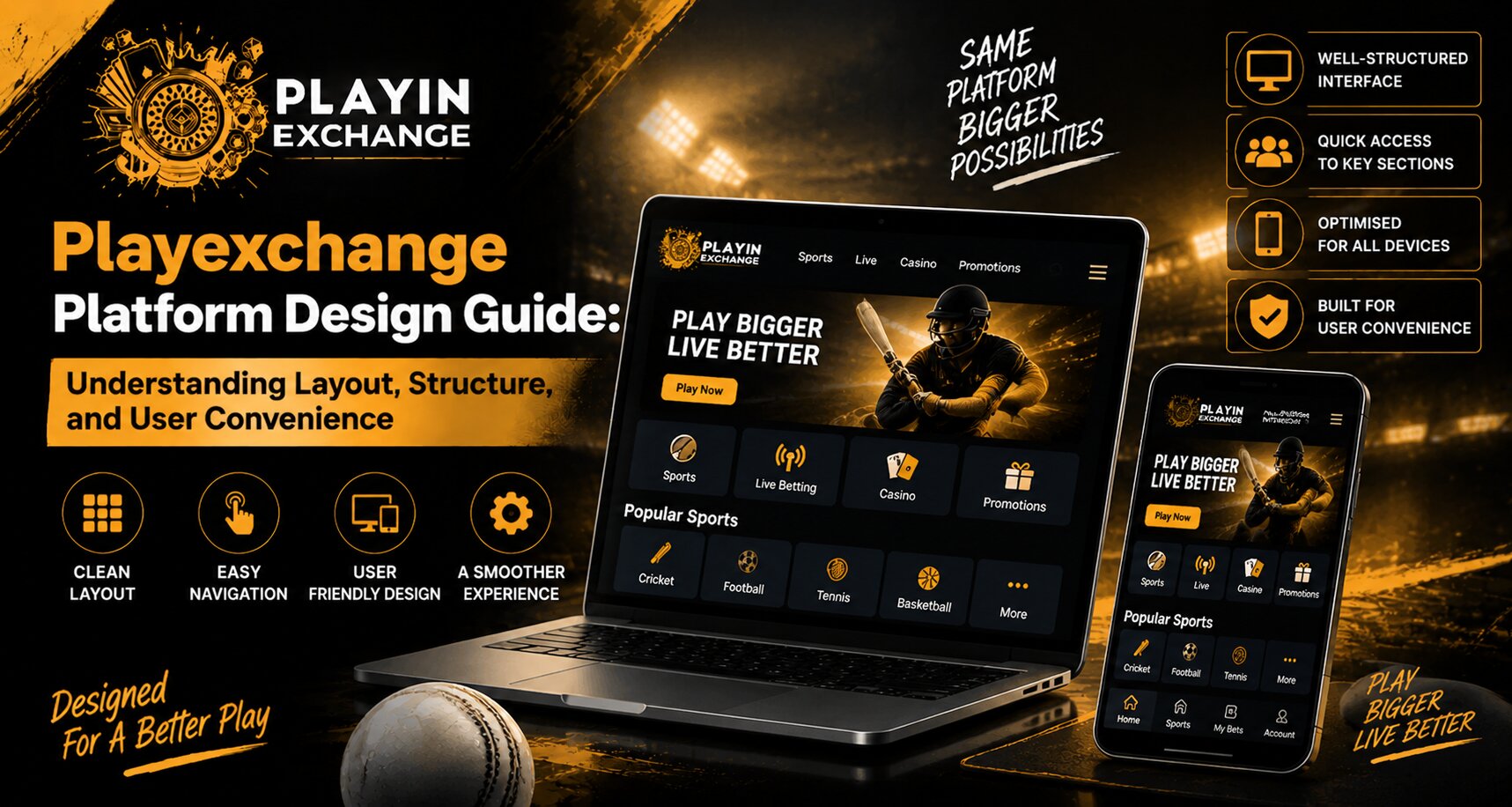
A well-designed digital platform helps users interact with information more easily. Layout, structure, and accessibility play an important role in creating a smooth browsing experience. Playexchange focuses on maintaining an organised environment where users can explore different sections with better understanding and convenience.
Modern users prefer platforms that provide simple navigation, clear information placement, and a comfortable interface. Good design helps reduce confusion and allows users to find relevant sections quickly.
What Is Platform Design?
Platform design refers to the way different elements of a digital service are arranged and presented to users.
It includes:
- Page structure
- Visual arrangement
- Navigation flow
- Information organisation
- User interaction
A balanced design helps users understand how different sections work.
Why Good Design Matters
A platform’s design directly affects how users interact with it. A confusing layout can make simple tasks difficult, while a clear structure creates a smoother experience.
Benefits of effective design include:
Easier Navigation
Users can move between sections without unnecessary steps.
Better Information Discovery
Proper organisation helps users locate important details quickly.
Improved User Comfort
A clean interface creates a more enjoyable browsing experience.
Important Elements of a User-Friendly Layout
A strong platform design includes several important components.
Clear Section Arrangement
Information should be organised in a logical order so users can understand the platform structure easily.
A good arrangement includes:
- Proper categories
- Clear headings
- Simple page flow
- Easy access points
Balanced Visual Structure
A platform should maintain a balance between information and design elements.
Important factors include:
- Readable content
- Proper spacing
- Simple presentation
- Consistent formatting
A balanced structure improves readability.
And user can playexchange login to manage your account.
Simple Navigation Flow
Navigation should guide users naturally from one section to another.
A good navigation flow includes:
- Easy-to-find menus
- Clear page connections
- Logical categories
- Quick access options
This helps users explore without confusion.
Role of User-Centred Design
User-centred design focuses on creating experiences based on user needs and expectations.
Important considerations include:
- Understanding user behaviour
- Reducing unnecessary complexity
- Making information accessible
- Improving convenience
A user-focused approach creates a more practical platform experience.
Read Also : How to Read Cricket Betting Odds: A Complete PlayExchange Guide
Importance of Consistency in Design
Consistency helps users understand how different parts of a platform work.
Examples include:
- Similar menu styles
- Familiar layouts
- Matching page structures
- Predictable navigation patterns
When design remains consistent, users can learn the platform faster.
How Good Design Supports Mobile Users
Many users access digital platforms through smartphones, making flexible design important.
Mobile-friendly design should provide:
- Responsive layouts
- Easy scrolling
- Clear buttons
- Proper content display
A flexible interface improves accessibility across devices.
Common Design Challenges
Some platforms face issues because of poor structure.
Overcomplicated Layouts
Too many elements can make navigation difficult.
Solution:
Use simple structures and organised sections.
Poor Information Placement
Important details can become difficult to find.
Solution:
Arrange information logically with clear categories.
Inconsistent Design
Different page styles can confuse users.
Solution:
Maintain a consistent interface throughout the platform.
Tips for Better Digital Interaction
Users can enjoy a smoother experience by:
- Exploring available sections
- Understanding menu options
- Using updated devices
- Checking information carefully
- Following organised navigation paths
These habits help users interact more effectively.
Final Thoughts
Platform design is an important part of creating a smooth digital experience. A clear layout, organised structure, and user-friendly approach help users navigate comfortably.
By focusing on simplicity and accessibility, digital platforms can provide a more convenient experience for users across different devices.
FAQs
What is platform design?
Platform design refers to how information, features, and navigation elements are arranged within a digital service.
Why is a simple layout important?
A simple layout helps users find information faster and reduces confusion.
How does design affect user experience?
Good design improves navigation, readability, and overall platform interaction.
Why is consistency important in design?
Consistent design helps users understand how different sections work.
Does mobile-friendly design improve accessibility?
Yes, responsive design helps users access platforms comfortably on different devices.