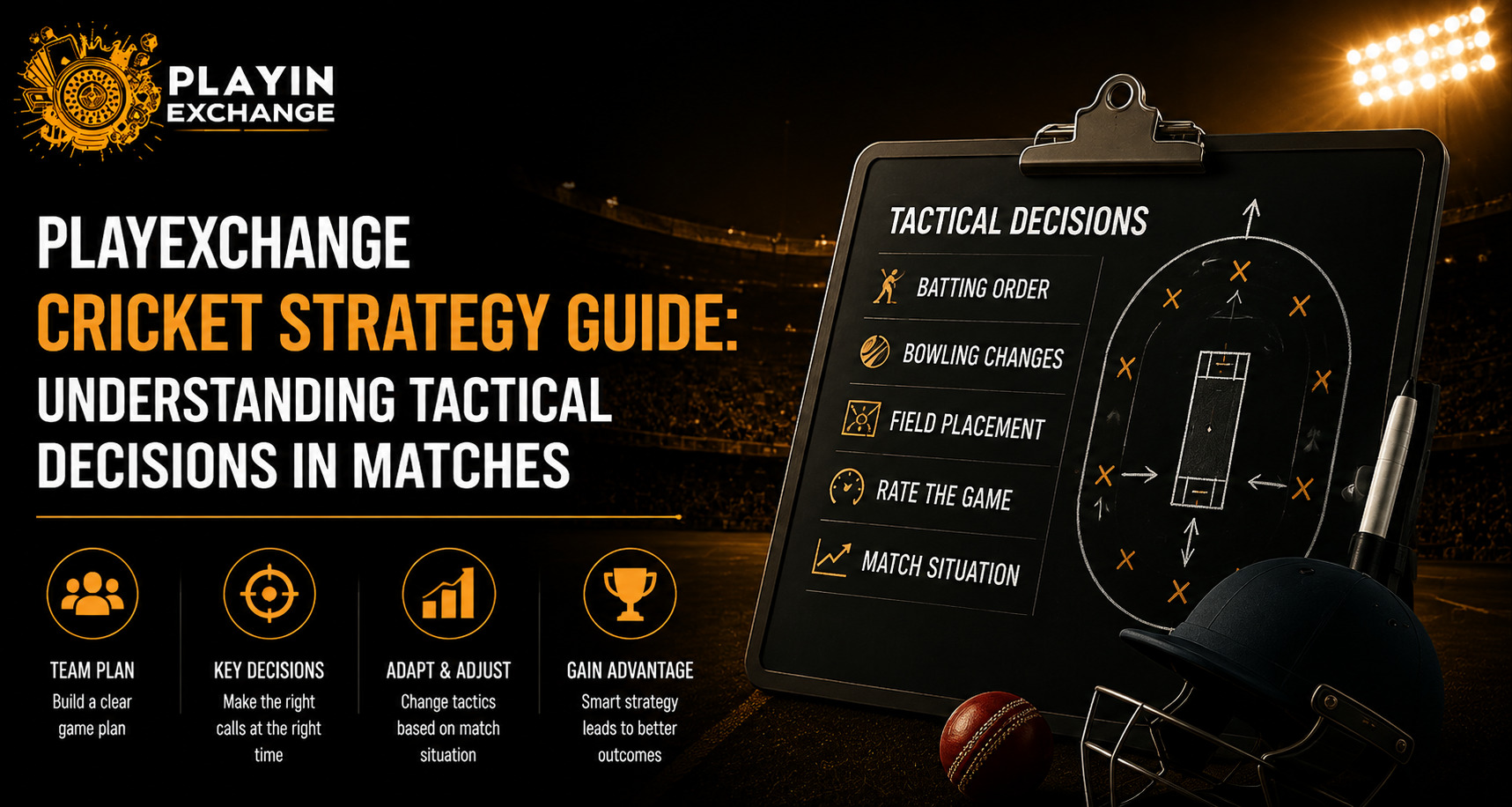
Importance of Strategy in Modern Cricket
Modern cricket is not only about individual performances but also about smart planning and tactical execution. Teams now spend significant time analysing opponents, studying player strengths, and preparing strategies according to match conditions.
From selecting the playing XI to deciding bowling changes, every decision can influence the final result. A strong strategy helps teams manage pressure situations and adapt quickly during matches.
A detailed Playexchange Cricket Strategy approach helps fans understand how teams prepare and why certain decisions are made during important moments.
Major Elements of Cricket Strategy
A successful cricket strategy depends on multiple factors, including:
- Team combination
- Player strengths
- Opposition analysis
- Pitch conditions
- Match situation
- Previous performances
Teams use these factors to create plans that suit different formats like Test, ODI, and T20 cricket.
Role of Captaincy Decisions
Captaincy plays a major role in cricket strategy. A captain needs to make quick decisions based on changing match situations.
Important captaincy decisions include:
- Selecting the right bowlers at important moments
- Setting attacking or defensive field placements
- Changing batting positions
- Managing pressure situations
A good captain understands the strengths of players and uses them effectively and user can playexchange login to manage your account..
Importance of Player Roles
Every player in a team has a specific responsibility. Understanding these roles helps explain team strategies.
Examples include:
Opening Batters
Openers focus on providing a stable start and handling the new ball.
Middle-Order Batters
Middle-order players build partnerships and manage pressure situations.
All-Rounders
All-rounders provide balance by contributing in both batting and bowling departments.
Specialist Bowlers
Bowlers are used according to match situations, pitch conditions, and opposition weaknesses.
read also : Playexchange Webpage Translation Guide: Making Pages Easier to Understand
Match Situation Planning
Cricket matches can change quickly, which is why teams prepare different plans.
Important situations include:
- Losing early wickets
- Building partnerships
- Defending small totals
- Chasing high targets
- Managing final overs
Teams that adapt better often perform well under pressure.
How Conditions Influence Strategy
Playing conditions strongly affect tactical decisions.
Teams consider:
- Pitch behaviour
- Weather conditions
- Dew factor
- Ground dimensions
- Home advantage
For example, a spin-friendly pitch may encourage teams to select additional spinners, while a fast surface may support pace bowlers.
Role of Data in Cricket Strategy
Technology has changed how teams prepare for matches.
Modern teams use data to analyse:
- Player weaknesses
- Bowling patterns
- Scoring areas
- Opposition strategies
- Previous match performances
This information helps teams create more effective plans.
Future of Cricket Strategy
Cricket strategy will continue evolving with the growth of technology and advanced analytics.
Future teams are expected to focus more on:
- Performance tracking
- Tactical planning
- Player flexibility
- Match-specific strategies
Key Takeaways
- Strategy plays a major role in cricket success.
- Captaincy decisions can change match outcomes.
- Player roles create team balance.
- Conditions influence tactical planning.
- Data analysis is becoming essential in modern cricket.
FAQs
Why is cricket strategy important?
Cricket strategy helps teams prepare for different match situations and improve decision-making.
What factors influence cricket strategy?
Player form, conditions, opposition strength, and match situations influence team strategies.
How does technology help cricket strategy?
Data analysis helps teams understand performances and create better match plans.