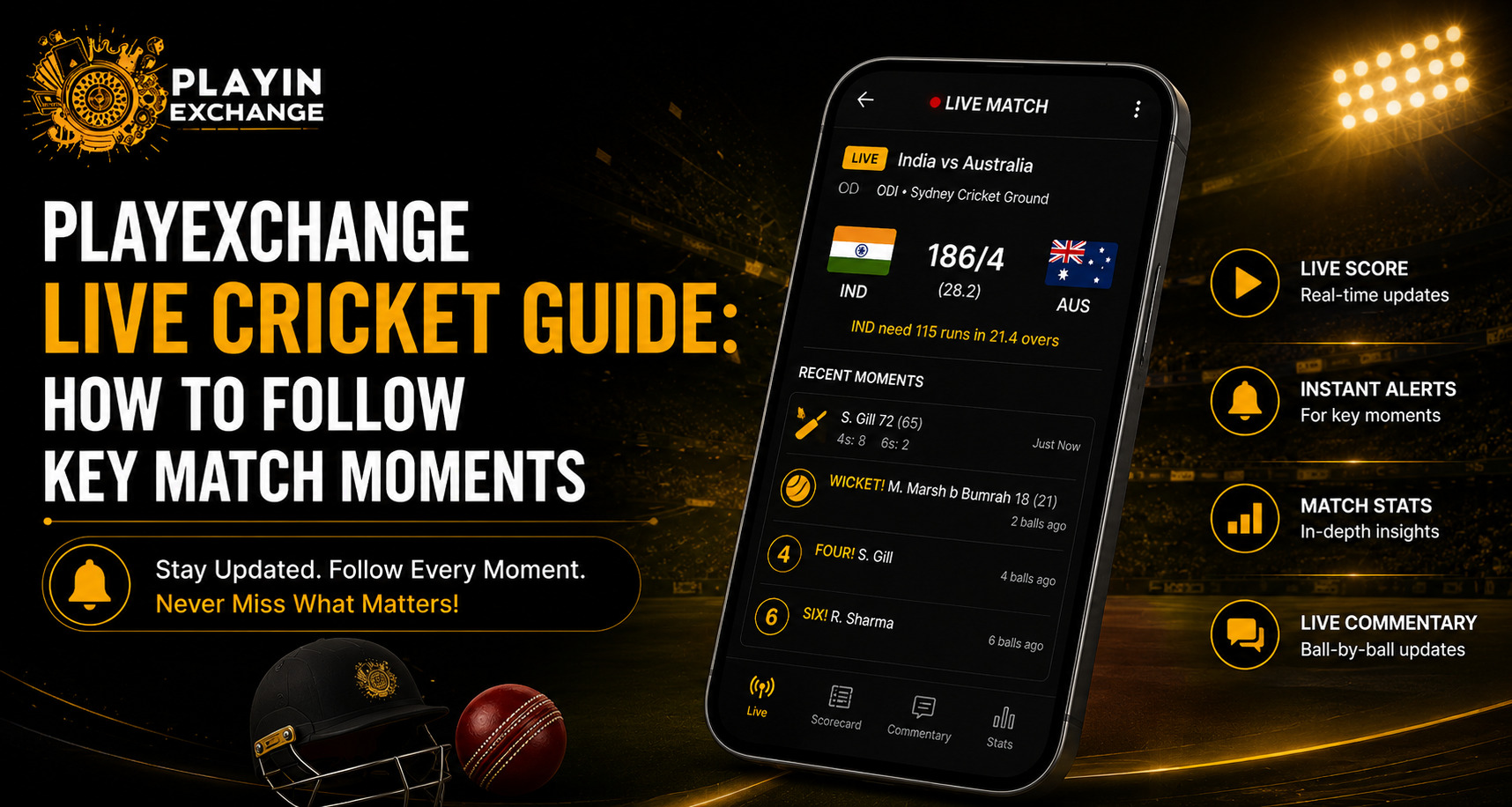
Live cricket is about more than watching the score change. Every wicket, partnership, bowling spell and scoring burst can alter the direction of a match. For fans following Playexchange live cricket information, understanding which details matter most can make live match coverage much more useful.
Why Live Cricket Information Matters
Cricket matches can move rapidly, especially in T20 and ODI formats.
A useful live update can provide information about:
- Current score
- Wickets
- Overs
- Current batters
- Bowling figures
- Partnerships
- Required runs
- Match status
- Recent events
Following these details together gives a clearer picture of the game.
read also : Playexchange Guide How to Start with Skill-Based Gaming Platforms in India
Start With the Current Score
The score is the quickest way to understand the basic match situation.
However, the score should always be viewed alongside:
- Number of wickets lost
- Overs completed
- Target
- Current partnership
- Remaining overs
For example, two teams may have similar scores but completely different situations depending on wickets and overs remaining.
Watch Wickets Closely
Wickets are among the biggest momentum-changing events in cricket also u can playexchange login manage your account.
A wicket can:
- End a partnership
- Bring a new batter to the crease
- Increase pressure
- Change the required scoring approach
- Force tactical bowling changes
Several wickets falling quickly can completely change an innings.
Partnerships Can Change a Match
Partnerships often provide stability after wickets.
A successful partnership can allow a team to:
- Rebuild an innings
- Rotate the strike
- Increase scoring later
- Reduce pressure
- Create a platform for the final overs
For this reason, partnership information is valuable when following a live match.
Follow the Scoring Rate
The scoring rate shows how quickly runs are being accumulated.
In limited-overs cricket, the scoring rate becomes particularly important because the number of available deliveries is fixed.
During a chase, fans can compare:
Current Run Rate vs Required Run Rate
If the required rate continues increasing, the batting team may face greater pressure.
Pay Attention to Bowling Changes
Captaincy decisions can influence the direction of a match.
Bowling changes may occur because of:
- Batter matchups
- Pitch conditions
- Required run rate
- Wicket-taking opportunities
- Bowler workload
- Death-over planning
A new bowler can sometimes change the rhythm of an innings.
Understanding Key Match Moments
Not every delivery receives the same level of importance.
Important moments may include:
Early Wickets
Early wickets can force a batting side to change its approach.
Large Partnerships
A long partnership can shift pressure towards the bowling team.
Fast Scoring Bursts
Several boundaries in an over can quickly change the required rate.
Successful Reviews
DRS decisions can alter important moments, particularly when a key batter or bowler is involved.
Death Overs
The final overs often create rapid changes in both score and match pressure.
Why Commentary Adds Context
A scoreboard tells fans what the numerical situation is, while commentary can explain what happened.
For example, a sudden increase in the score may be caused by:
- Consecutive boundaries
- Extras
- A bowling error
- Aggressive batting
- A fielding mistake
Reading commentary alongside the score can therefore provide a more complete understanding.
Test Cricket Requires a Different Approach
Live match information is interpreted differently in Test cricket.
Fans may need to consider:
- Session progress
- Lead or deficit
- Wickets remaining
- Partnership duration
- Run rate
- Follow-on possibilities
- Declaration
- Remaining match time
A Test match can change gradually, meaning individual sessions and partnerships may be more important than short scoring bursts.
ODI and T20 Matches Move Faster
Limited-overs cricket creates a stronger focus on scoring pace.
In ODIs and T20s, fans commonly monitor:
- Powerplay score
- Current run rate
- Wickets in hand
- Required run rate
- Boundary count
- Death-over performance
These statistics help explain whether a team is ahead or behind the expected pace of the innings.
How to Follow a Match Efficiently
A simple method can make live cricket easier to understand:
- Check the match status.
- Look at the score and wickets.
- Check overs completed.
- Identify the current batters.
- Review the current partnership.
- Check bowling figures.
- Compare scoring rates.
- Read recent commentary.
- Consider pitch and weather conditions.
This prevents fans from becoming overwhelmed by too many numbers.
Why Reliable Updates Are Important
Live cricket information must be accurate because even a small error can create confusion.
Good match coverage should clearly present current information and avoid mixing older statistics with live updates.
Fans should also distinguish between confirmed match information and pre-match opinions or predictions.
Responsible Interpretation of Live Cricket
Live information can improve understanding of a match, but it should not be treated as a guarantee of what will happen next.
Cricket is unpredictable. A single wicket, injury, bowling spell, dropped catch or weather interruption can change the situation.
Using live data to understand the match is more useful than assuming that one trend will continue.
Key Takeaways
- Live cricket coverage includes much more than the score.
- Wickets and partnerships are major momentum indicators.
- Run rate is important in limited-overs cricket.
- Required run rate helps explain chasing pressure.
- Commentary adds context to score changes.
- Bowling changes can influence match momentum.
- Test, ODI and T20 statistics require different perspectives.
- Live statistics should be interpreted carefully.
Frequently Asked Questions
What should I check first during live cricket?
Start with the score, wickets, overs and current match status.
Why are wickets important?
Wickets can end partnerships and force teams to change their batting strategy.
What does current run rate show?
It shows the average scoring pace of a team based on the runs scored and overs completed.
Why is commentary useful?
Commentary explains the events behind changes in the score, including wickets, boundaries and other key moments.
Is live cricket data enough to predict a result?
No. Live data explains the current situation but cannot guarantee the final result.